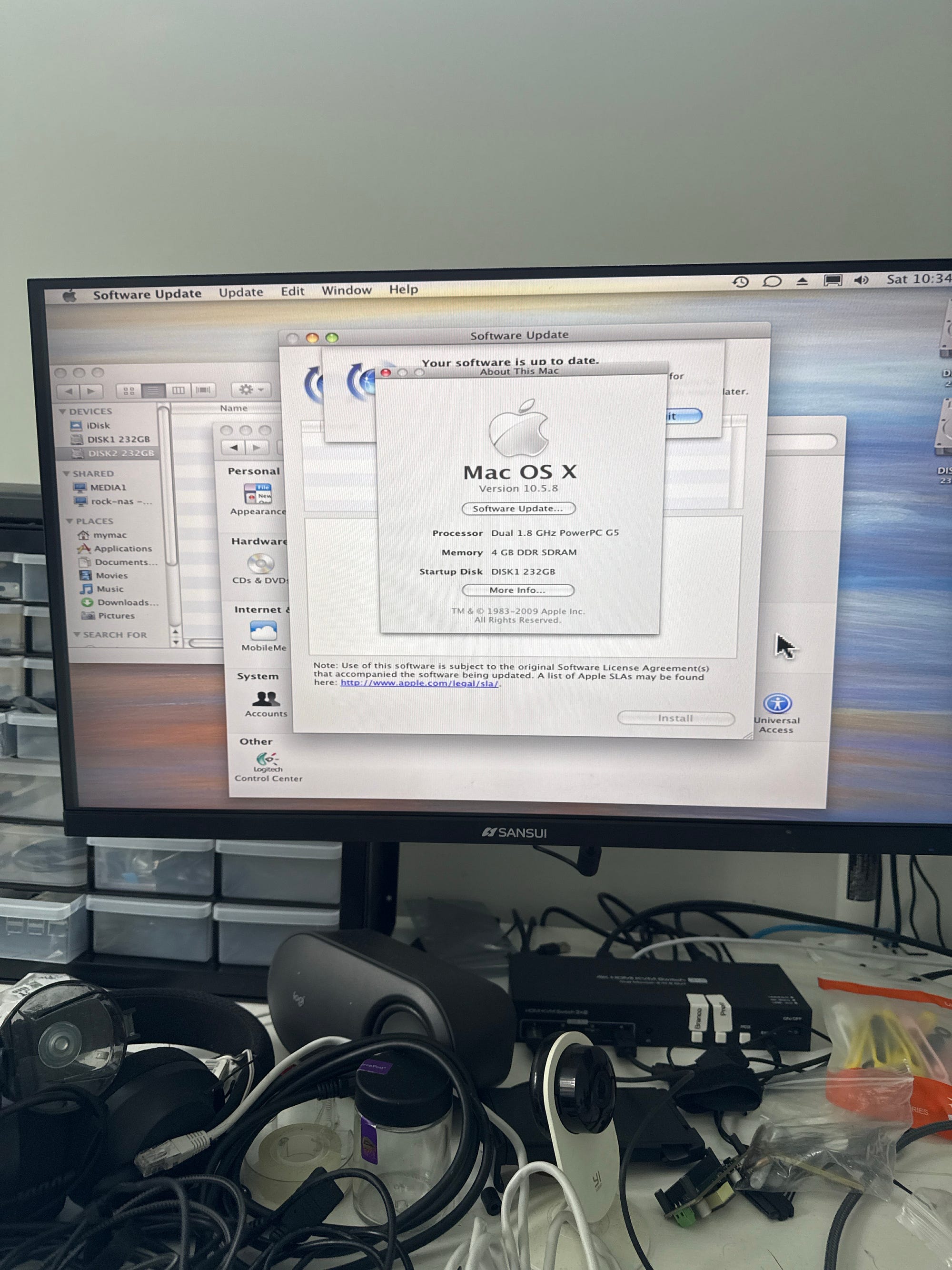
Casquinha running on Mac OS 9.2 — now playing over gopher-spot, with a search box and a play queue

One Frozen Gopher API, Native Clients from Mac OS 9 to Android

Here is the whole idea in one sentence: I control Spotify from a Mac OS 9 machine, over the Gopher protocol. This is a real System 9 desktop. The now-playing, the search, the queue — all of it is plain Gopher menus going to a box in my closet. That screenshot is the fun part. The load-bearing part is duller and more useful, and it’s the reason a 2001 Power Mac and a 2024 Android phone can both talk to the same server without sharing a single line of code. ...

July 19, 2026 · 4 min · Felipe De Bene
A three-card tarot reading drawn in ASCII frames, in a gopher browser

A Gopher Constellation in a Day

A few days ago I put live CTA trains on gopher — the 1991 text protocol, no JavaScript, no cookie banners, the internet with the volume turned down. I called that post “Live Trains on a Quiet Internet” and figured that was the end of it: one weird little gopherhole, scratching one itch. It wasn’t the end of it. This morning I opened the project back up “just to add a link,” and by the time I looked up it was dark out and I had a whole neighborhood. A shared library underneath. A phlog. An interactive tarot reader that draws three cards and reads them against the actual sky overhead. And a hub tying the three of them together. ...

June 27, 2026 · 10 min · Felipe De Bene
CTA 'L' train map rendered in colored dots on dark terminal

Live Trains on a Quiet Internet

I spend my days in cloud control planes, dashboards that auto-refresh, tabs that beg for attention. So when I go home to tinker, I keep reaching for the opposite: machines and protocols that sit still until you ask them something. Vinyl instead of an infinite feed. A POWER8 box humming in the corner instead of someone else’s serverless. And lately — gopher. If you’ve never used it: gopher is a protocol from 1991, older and simpler than the web. No JavaScript. No ads. No cookie banner asking permission to track you while pretending it’s about your “experience.” No fonts loading from six CDNs. You connect to a server on port 70, send it a short string called a selector, and it hands back either a menu or a plain text file. That’s the whole thing. A menu is just lines; some lines are links to other selectors. You navigate a worldwide information system by reading and pressing enter. ...

June 23, 2026 · 9 min · Felipe De Bene
PowerMac G5 aluminum tower

Cloud Architect Meets PowerPC: The $50 Time Machine

For fifty bucks, I got myself a time machine. Ray — the older gentleman who sold it to me — was equal parts amused and confused that someone like me still existed. For the price of a dinner out, I walked away with a brushed-aluminum tower that once symbolized Apple’s peak desktop performance. Now it sits proudly next to my daily driver (“Study”), humming away like a jet engine preparing for takeoff. I hit the power button, braced for the famous chime… and there it was: Mac OS X 10.5.8 Leopard, dual 1.8 GHz G5 CPUs, 4 GB of RAM, and a 500 GB Maxtor spinning drive that sounds like a diesel generator. Inside? Comcast invoices from 2012 and a still-configured iChat account. The ghost of broadband past. ...

August 31, 2025 · 4 min · Felipe De Bene
iBook G4 white clamshell laptop

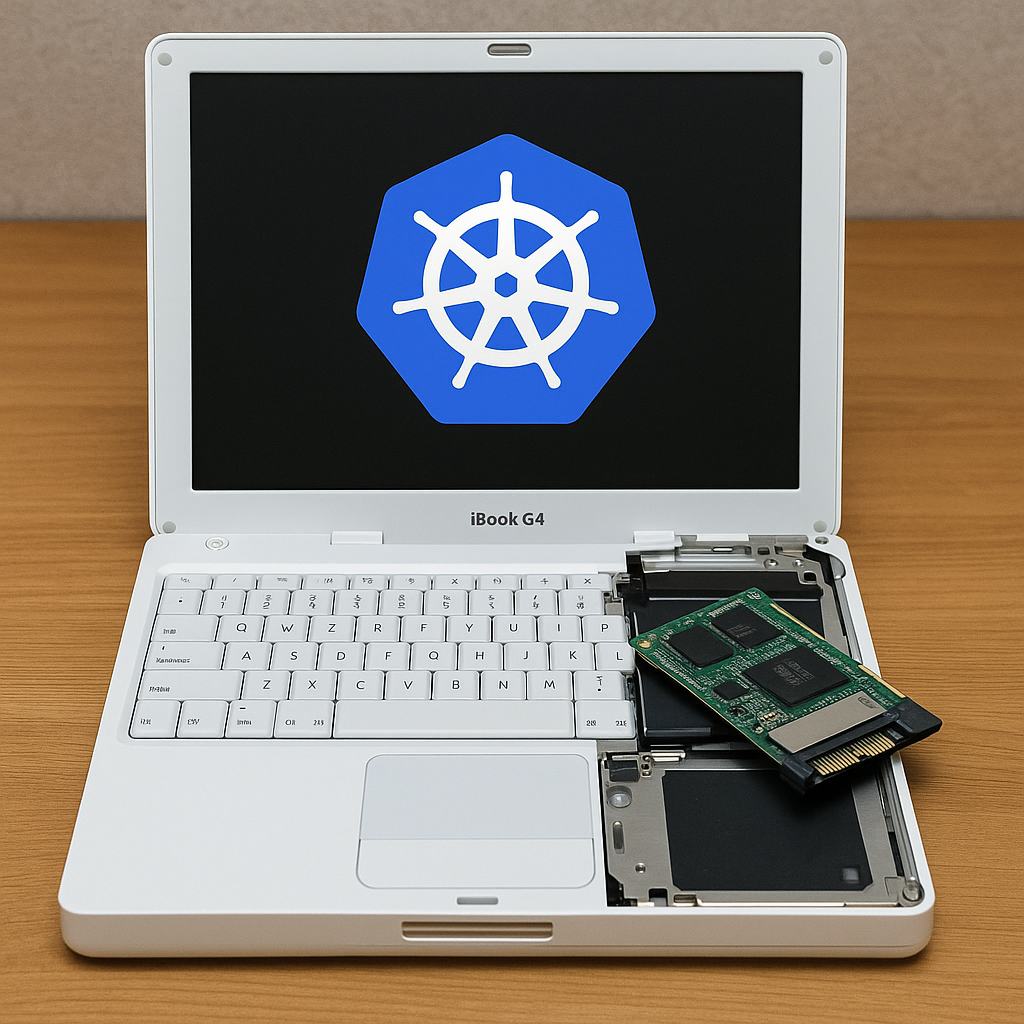
Resurrecting My iBook G4: A 20-Year Dream Built on Compiler Errors and Hope

The Dream Back in the early 2000s, teenage me was obsessed with the iBook G4. That sleek white clamshell with its PowerPC CPU and AltiVec engine felt like the future. I couldn’t afford one then — but now, two decades later, I finally scored one: a 1.33GHz model for $67 on eBay, original box and all. Reality hit hard. The 60GB hard drive was dying The RAM was maxed at 1.5GB (after some firmware trickery) I destroyed the power button during an SSD upgrade This is the story of how I brought it back to life — and turned it into a (surprisingly capable) development machine in 2025. ...

May 22, 2025 · 5 min · Felipe De Bene